


Lic. No 1144024
209-743-4608

🔌 Professional 240V Appliance Outlet Installations – High-Voltage Power
Ensure your high-amperage household appliances receive safe, steady, and code-compliant electrical power. As licensed electrical contractors, we install and replace heavy-duty 240-volt receptacles. Because these units pull double the voltage of standard wall plugs, we ensure all terminations are perfectly balanced and torque-tested to prevent fire hazards and expensive appliance damage.
💰 240V Appliance Service Menu
Standard 240V Heavy-Duty Outlet Replacement | $150 – $250 per device
Replace worn, loose, burned, or outdated high-voltage receptacles to restore secure, reliable power to your major home appliances.
-
Best For: Existing laundry rooms or kitchens where an old 240V plug is loose, shows visible burn marks, feels hot to the touch, or needs an upgrade from an old ungrounded 3-prong setup to a modern 4-prong outlet.
-
Included Labor: Circuit isolation at the main breaker panel; testing structural line, neutral, and ground wires; safe removal of the degraded receptacle box; installing a premium, heavy-duty 30-amp or 50-amp commercial-grade outlet (NEMA 14-30R, 10-30R, 14-50R, or 6-50R); torque-testing heavy gauge terminal screws to precise manufacturer specifications; and mounting a heavy-duty trim plate.
-
🚨 Scope Note: Pricing includes installing a new 240V outlet box or replacing a pre-existing one only. It does not include running new high-voltage circuit wires. If a new circuit run back to the breaker panel is required, please see the New Circuit Run line item below.


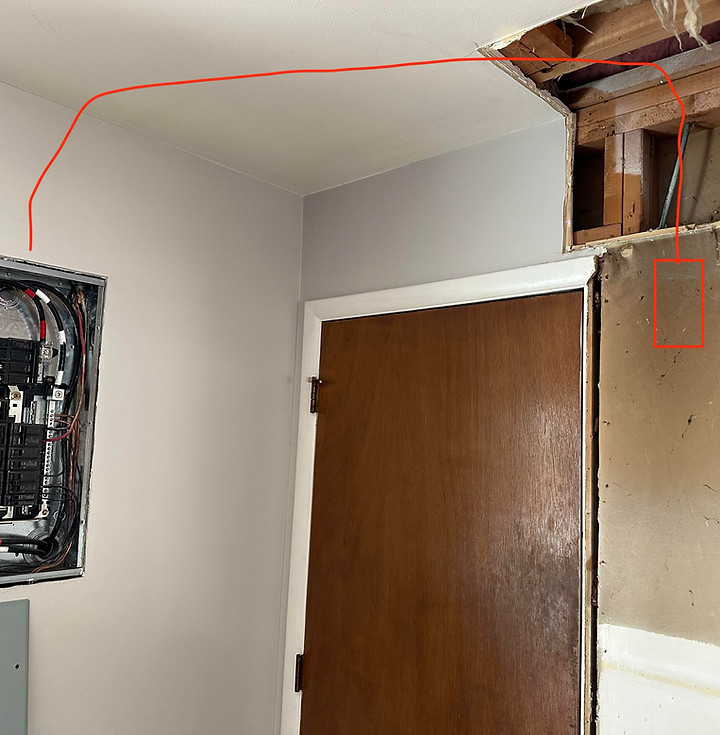
New Circuit Run & Conduit Installation | $150 – $1,800+ per run
Establish entirely new high-voltage electrical pathways directly from your main electrical panel to your new appliance location.
-
Best For: Moving a laundry room to a new floor, remodeling a kitchen for a dual-fuel oven, or routing a dedicated line for a garage workshop compressor.
-
Included Labor: Installing an appropriately sized double-pole circuit breaker into your main panel (typically 30A, 40A, or 50A); mapping a long-distance structural path; pulling thick, heavy-gauge electrical wire (such as 10-gauge or 6-gauge copper) through newly installed surface conduit (EMT), liquid-tight whips, or attic spaces directly to the appliance location.
-
Pricing Factors: Simpler branch line extensions through open framing fall into the $150 – $350 tier, while heavy dedicated panel home runs span $450 – $850. The overall range scales up to $1,800 based on attic space accessibility, core-drilling through exterior concrete or brick walls, the total length of the high-amperage line run, and whether interior finished walls must be opened to fish lines.
-
🚨 Sheetrock Disclaimer: Please note that we do not perform sheetrock repair, patching, or painting. Any wall restoration required after opening up finished sheetrock to fish wires is the sole responsibility of the homeowner.

🛡️ Why Choose a Licensed Electrical Contractor for 240V Lines?
-
Heavy Thermal Expansion Protection: 240V appliances pull massive current continuously. If a terminal wire screw is even slightly loose, it will cause an immediate electric arc and melt the outlet. We utilize professional digital torque tools to secure every high-voltage termination to exact code specifications, preventing fire hazards.
-
Modern 4-Prong Safety Compliance: Older building codes allowed ungrounded 3-prong configurations for dryers and stoves. Modern National Electrical Code (NEC) mandates isolated neutral and ground lines (4-prong setups) to protect users from severe electrical shocks. We ensure your configuration is fully safe and up to current safety standards.
-
Load Balance Verification: Adding a 30-amp or 50-amp load completely shifts the balance of power in your electrical panel. We verify your home's total electrical capacity before drawing a single wire, ensuring your home electrical infrastructure safely accommodates your new appliance configuration.